Movement Pens put to the test
Learn more
Movement pens put to the test. How a family farm from the Emsland is starting into the future with WEDA’s new FT30
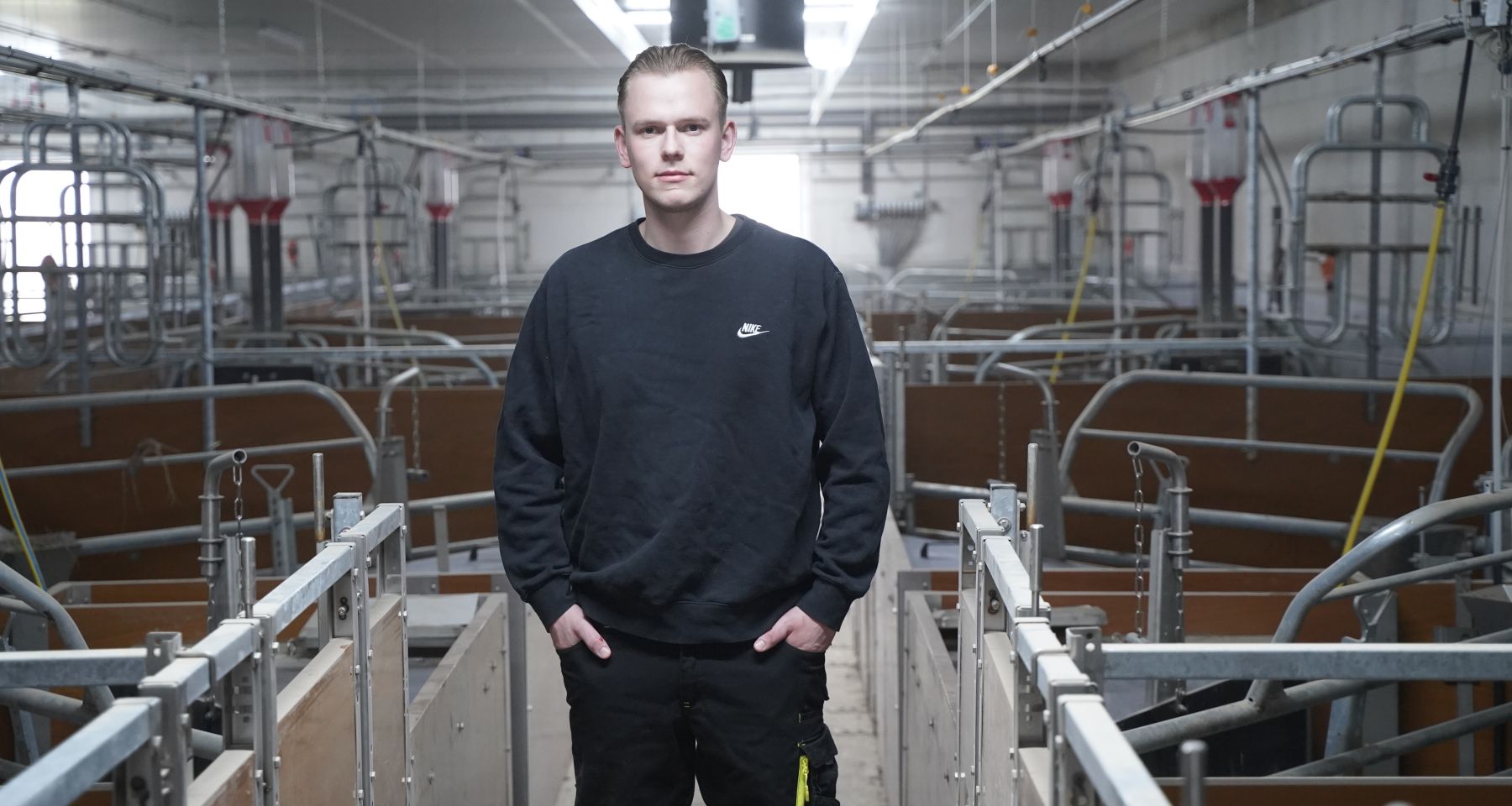
A new phase is beginning on the family farm of young farmer Luca, where around 750 sows with their own piglet rearing are currently kept. The expansion of the herd had already been decided jointly several years ago, and in retrospect that was exactly the right moment. The family fully stands behind the project, because the new sow barn is intended to secure the farm for the long term while also enabling more animal welfare. The fact that Luca and his sister completed their training just in time for the building’s completion fits perfectly into the overall picture. Both are joining with great motivation – as are the employees, who are looking forward to modern processes and technology that will bring significant relief.
A rhythm that brings structure and calm
In the future, the farm will operate on a 2-week rhythm, in which 64 sows farrow each time. After four weeks, the sows are weaned. The piglets remain in the familiar farrowing pen until they have reached 28 to 30 kilos. By avoiding a move to another barn, the litter remains in a calm environment, which reduces stress and promotes even growth. The decision in favor of this concept was made in part because the feeder in the pen is very easy to understand and the piglets quickly accept it, the siblings stay together, and weaning stress is reduced.
After weaning, the sows are moved to the breeding center, where they are inseminated again. They then move to the gestation barn and remain there until they are brought back to the farrowing area. This fixed structure makes work planning easier and ensures stable utilization of the different areas.
Technology that provides noticeable relief in everyday work
In addition to the interior equipment for the breeding center, WEDA also installed the gestation barn, the complete feeding system, the Nutrix suckling piglet feeding system, the straw dosing system, and the flooring in the farrowing barn. The technology is especially useful in everyday work with the SowComp feeding station for the sows. Each sow wears an ear tag that clearly identifies her. When she enters the feeding station, the gate closes automatically. If feed is due to her, the ration is dispensed. If she has already been fed, the station opens again and the sow usually leaves quickly, often encouraged by another sow moving up behind her. This combination of automatic control and natural animal behavior ensures smooth processes and calm groups.
Animal-appropriate and well-thought-out surroundings
Animal welfare plays a central role in the new barn. The FT30 movement pens give the sows more freedom of movement, while the piglets remain well protected thanks to the structure of the pen. The system is complemented by a well-thought-out straw dosing system, which is used in the gilt, quarantine, breeding, and gestation areas. The straw falls directly into the resting cones, where it reaches the animals without immediately ending up in the slurry. Occupying themselves with the straw leads to more natural behavior and more calm within the groups. The entire barn complies with husbandry level 2 and thus meets higher requirements for animal welfare and housing quality.
The connection with WEDA has existed since 2020. At that time, the farm was looking for a milk feeding system that would work without “carrying buckets,” and through demonstrations and discussions they became aware of Nutrix. This experience laid the foundation for a long-term collaboration, which is now reflected in a completely equipped sow barn. The technology is coordinated as a whole and facilitates both daily work routines and the care of the animals.
A team that stands behind the change
The transfer of the farm to the next generation is beginning step by step. Luca and his sister will run the farm together in the future. At present, they are supported by their parents and four employees: two employees on the old farm, one permanent employee in the sow barn, and another who will join the team in January. In this way, a capable team is taking shape that is bringing the new barn to life and actively supporting its further development.
A new building of this scale brings responsibility, but also a great opportunity. Luca describes the feeling of operating a completely new barn as something special. Of course, the system now has to prove itself in everyday practice, but the mood is optimistic. The calm processes in the FT30 movement pens, the well-thought-out feeding system, and the clear work structures show that the investment was well chosen and is strengthening the farm for the future.